Tuesday, January 23, 2007

#95: Piparras (Peppers from Spain)

Ingredients: Piparras, vinegar, salt, citric acid, ascorbic acid.
100% natural containing no preservatives or artificial flavors.

On my quest to taste as many food as possible on Food & Wine Magazine's 100 Tastes to try in 2007, I found myself ordering Spanish Matiz Piparras from Casa Oliver for $6.50 a jar. Piparras are a traditional long green pepper from the Basque Country of Spain. They are noted by Food & Wine as a food that is only recently available in the United States.

Kate at Kate in the Kitchen was the first to taste these peppers. She ate them with rustic bread and sprinkled them with olive oil and salt. She liked them but I was a bit skeptical since she described them as having a vinegary taste.

I had the jar sitting in my cabinet for about a week because I hadn't decided how I wanted to try them. I know it needed more than bread for me because I only like sweet peppers that way. Casa Oliver says "they make a wonderful accompaniment to Bonito tuna and smoked fish." So last night I finally grabbed them to add to my leftover red snapper. Before I mixed it into the salsa I ate one raw. NOT my thing! There is nothing about that pepper that I liked to eat it alone. It was nice mixed in with the sweetness of the fruit in my salsa because it added a different flavor.

So tonight I went all out and tried them again. This time I took six out of the jar, covered them with Greek Olive Oil and lots of salt. I had the same reaction with the first one I ate - ick! The flavor is just overpowering. But by the time I got to the third one, they weren't so jarring anymore and by the time I got to my sixth one I decided I liked them. My mouth just needed to warm up to them. And they are a bit spicy, it just doesn't hit you until you have a few.

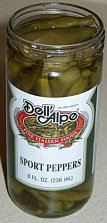
There is one thing I think they would be perfect for. Hotdogs! Chicago-style hotdogs are served up on a poppy seed bun topped with mustard, onion, sweet pickle relish, a dill pickle spear, tomato slices or wedges, sport peppers, and a dash of celery salt (and NO ketchup). Piparras taste almost exactly like those "sport peppers" except without the immediate heat.


What is it about Gyros?

I was at this really neat store called Land & Sea Market here in Tampa this weekend to get the red snapper for my Red Snapper Alicante. While waiting by the fish case I was checking things out. They had these really fresh looking gyros meat slices along with real, gyros-type pita breads and fresh sauce. So I picked up all the fixing and decided to make them tonight. I have been waiting since Saturday to finally eat them. They looked so good in the package and I had so much hope. Disappointed again. In the past I have tried the mass produced Gyros kit from the grocery store and I wasn't happy with those either. Nothing is ever good enough as which I can get at a fast food restaurant.

So what is about Gyros that is so hard to create at home. Has anyone ever been able to make good gyros themselves?

Monday, January 22, 2007

Leftover Fish and Random Pantry Salsa


David over at Cooking Chat has challenged us with Leftover Tuesdays. The concept is simple: use your leftovers in a creative way to make a new meal.

The idea is sound and even seems like fun. My problem is that when I eat leftovers, I am use to just reheating the same meal. That is why I only like to eat leftovers one time and then the rest goes to the dogs. However when I was cooking this weekend, I looked at each meal and tried to come up with ways to change it up and make some creative leftovers.

I decided to work with the fish leftover from the Red Snapper Alicante I made on Saturday night. I wanted to use this because I had two large fillets left and, besides the fact that it was expensive and I didn't want to waste it on the dogs, re-heating fish for lunch in the microwave does not appeal to me. The fish was cooked simply with rings of onions and peppers so it was nicely flavored but there was no sauce.


Now I had to figure out what to do with the fish. At first I thought of making a taco but I thought that seemed kind of boring. I'm sure it would have tasted good but I didn't want to cover up the delicate taste of the red snapper with lots of filling. I racked my brain for flavors to compliment fish and I settled on doing something with fruit. I was thinking about some sort of mango salsa.

The only problem was that I didn't have any fresh mangoes. And this being a leftover challenge, I didn't want to make a special trip to the store to get some. So I turned to my pantry. I used a cup of Dole's Mixed Tropical fruit. I drained out the juice and placed the mango, pineapple and papaya fruit pieces in a bowl. Then, back to the pantry . . .

I received an order last week from Casa Oliver. I had ordered several items from Matiz, a company from Spain. I found them because the peppers are on the list of 100 foods I have to try in 2007 that Food & Wine magazine put together. I grabbed the peppers and Sweet Garlic.


I also grabbed some Banana Ketchup that I bought while in the Caribbean last year. It tastes so good but I have not found anything to eat it with. Since I was feeling creative I decided to toss that in with the fruit, garlic and peppers. I mixed it all together and poured it on top of the fish.

It turned out great! The peppers didn't really contribute that much because I probably didn't add enough, but every once in a while I'd get a vinegary crunch from them. The fruit and the banana ketchup both definately go well with the fish. I'm going to have to find some more creative uses for that banana ketchup.

I have to thank David for this challenge because I am usually a recipe follower. I rarely put random things together. But tonight I completely stepped out of my comfort zone and it was really fun. I'm going to have to do this more often.


Where's Anthony Bourdain? In Namibia.


"You'll never get the truly good meals in life
if you don't open yourself out to the bad ones."

I suppose it's pretty pathetic that I have only heard of this country because it is where Angelina Jolie decided to give birth to her child. Thankfully though Anthony Bourdain has decided to explore Namibia on camera to show the wonderful country to us all.

This episode of Anthony Bourdain: No Reservations begins on a boat in Walvis Bay with an oyster farmer. Back on land, they watched as the oysters were processed in the hatchery and Tony commented that they are some of the best oysters he has tried in the entire world. Tony then "rode the dunes" in the exact opposite type of environment - the desert. A snowboard on sand. Wow. It looks hot but thrilling. Tony did a pretty good job and made it all the way down without eating sand.

But the best part was when Tony had breakfast with the bushmen. They made him an ostrich-egg omelette in this neat pit in the ground. The egg is poured right onto the hot sand. Wood is placed to surround the outside and then additional wood is placed on top. The end result is a whole bunch of ash and dirt baked onto of the hardened egg. It looked horrible but it was seen as a special dish to the bushmen because it is not often that they get their hands on some ostrich eggs. I don't see it becoming popular over here in the United States any time soon.


Of course Tony had some of the nasty bits as well. He tried different parts of a warthog including the rectum and brains which he called the worst meal of his life. The bushmen also served him tree beatles which are only found in one certain type of bush. The tribe makes an event of their gathering. Tony had several of them and claimed that they were the single best thing he had eaten all day.

In the city, one of Tony's friend took him to the market. They had all this meat cooking up on a HUGE grill and it looked so tasty. With some other friends while out on a huntin, Tony tried some Namibian truffles. These are not the chocolate truffles, they are from the white truffles that grow wild in the desert. There were no communication problems at this market like he had in Ghana because the national language of Namibia is English.

It was interesting to see Namibia from Tony's perspective. It is a filled with cultures that I can only try to understand. The people are strong survivors and live in the purest sense by living off of the land.

Next Week: Tony visits Russia.

Sunday, January 21, 2007

Stuffed Roasted Strawberries

Stuffed Roasted Strawberries
They taste better than they look! I first saw these Stuffed Roasted Strawberries on 30 Minute Meals. I had the Food Network on one day while I was doing things and I happened to catch Rachael Ray putting strawberries into the oven. I was intrigued by that. When I started to pay attention I noticed that the strawberries were being filled with chocolate! At that point I knew I wanted to try them to use as my entry for Sugar High Friday #27: Chocolate By Brand hosted by David Lebovitz. Strawberry season is just starting down here in Florida. This is a perfect way to eat more fresh strawberries!

As is typical for me, my strawberries ended up looking nothing like hers. Even though I cut off the bottoms so that they were level, over half of them tipped over while roasting. I filled my strawberries with some chopped Lindt Lindor Dark Chocolate Truffle pieces which I received as a Christmas gift. The result is like a warm inside-out dipped strawberry. It is a fun dessert because it is light and unusual. All my friends know that Lindt is my favorite chocolate so I received a whole bunch of yummy Lindt chocolate. Ah, the simple pleasures . . .


Stuffed Roasted Strawberries
Serves 4

Ingredients
12 extra-large strawberries (the bigger the better!)
1 to 2 ounces bittersweet chocolate, chopped
1 teaspoon sugar, optional
Spray whipping cream (the real kind in the can in the dairy section)
Cocoa powder, for garnishing

Instructions

Preheat the oven to 400 degrees F.

Slice the tops of the berries off just below the stem. Cut the tips off (about 1/4-inch), so that the berries will sit upright. Next, use a small spoon or a melon ball scoop to hollow out the strawberries, working from their tops, in order to create a cavity in each one. Stuff some chocolate into the cavity of each strawberry and place them upright in a baking dish. Lightly sprinkle the berries with sugar, if using. Roast the berries until soft and the chocolate is melted, about 10 to 12 minutes.

To serve, place 3 strawberries on a dessert plate in a triangle. If the berries have given off liquid in the baking dish, spoon it over them. Spray a small mound of cream in the center of the berries, and top each berry with a rosette of cream. Sift a little cocoa powder over the plate, and serve!


Moroccan Stew: Chicken Tagine with Lemon and Olives


I decided to go Moroccan for the inaugural Waiter, There's Something in my . . . Stew hosted by Spittoon Extra. This is a fun new blogging event with a different foodie theme for each month. For my entry, I chose Chicken Tagine with Lemon and Olives from the January, 2007 issue of Cooking Light Magazine. A tagine, the food, is a rich Moroccan stew. Many tagines are vegetarian, but I also like ones with meat. The cooking method yields some wonder flavors making something really special out of vegetables.


A tajine (tah-zheen) is a Moroccan dish as well as a special pot for preparing this dish. The traditional tajine pot is formed entirely of a heavy clay which is sometimes painted or glazed. It consists of two parts; a bottom which is flat and circular with low sides, and a large cone or dome shaped cover that rests inside of the bottom during cooking. The cover is so designed to promote the return of all condensate to the bottom. With the cover removed, the bottom is open and shallow for easy serving at the table.

Tajine dishes are slow cooked at low temperatures, resulting in tender, falling-off-the-bone meat with aromatic vegetables and sauce. The cover has a knob-like formation at its top to facilitate removing it. While simmering, the cover can be lifted off without the aid of a mitten, enabling the cook to inspect the main ingredients, add vegetables, move things around, or add additional braising liquid, if needed.


While a ceramic tagine is on my wish-list, I currently don't own one. I made this dish in deep pan on the stove. I have only prepared a tagine one other time in my life and it came out so flavorful and tender that I immediately fell in love with them. The smells in the house are so amazing while it is cooking and it is perfect for a comforting Sunday evening meal. The taste with the Moroccan flavors is always so different from my average meals that I feel all proud because it tastes as good as anything you would eat at a restaurant.

And, it was perfect meal for tonight because THE CHICAGO BEARS ARE GOING TO THE SUPERBOWL!!!!!! They are my home team. I was in grade school the last time they went and watching the game tonight made me totally homesick . . . except for the fact that my house was all warm and yummy smelling like it used to be when I'd have friends over to watch the Bears games on Sunday afternoons in Chicago. It was always freezing cold and we'd all cuddle up on the couch and then we'd eat a good meal. Even though it's hot down here in Florida, watching it snow on TV and smelling a cold-weather stew made it perfect.

The recipe is good as it stands, but the only thing I suggest is to use olives from an "olive bar" that are found in a lot of supermarkets. The olives really make this dish and the ones out of the jar won't be as fresh. If you have to use jarred olives, make sure you buy large ones.


Chicken Tagine with Lemon and Olives
Serves 6 (serving size: 2 chicken thighs and 1/3 cup sauce)

Ingredients
2 tablespoons fresh lemon juice
12 skinless, boneless chicken thighs
1/4 cup all-purpose flour (about 1 ounce)
1/2 teaspoon salt
1/4 teaspoon freshly ground black pepper
1/4 teaspoon ground turmeric
1/8 teaspoon ground red pepper
2 teaspoons olive oil
2 cups chopped onion (about 2 medium)
1 teaspoon minced peeled fresh ginger
2 garlic cloves, minced
1 cup fat-free, less-sodium chicken broth
1/4 cup pitted green olives, halved (about 12)
2 teaspoons grated lemon rind
1 (3-inch) cinnamon stick
2 tablespoons chopped fresh cilantro

Instructions
Combine juice and chicken in a large zip-top plastic bag. Seal and marinate in refrigerator 30 minutes. Remove chicken from bag; discard marinade.

Pat chicken dry with paper towels. Dredge in flour; sprinkle with salt, black pepper, turmeric, and red pepper. Heat olive oil in a large nonstick skillet with high sides over medium-high heat. Add half of chicken; cook for 3 minutes on each side or until lightly browned. Remove from pan. Repeat procedure with remaining chicken.

Add onion, ginger, and garlic to pan; sauté 5 minutes or until tender. Return chicken to pan. Add broth, olives, rind, and cinnamon stick; bring to a boil. Cover, reduce heat, and simmer 1 hour or until chicken is tender. Discard the cinnamon stick; stir in cilantro.

NUTRITION PER SERVING
CALORIES 240(34% from fat); FAT 9.1g (sat 1.6g,mono 4.4g,poly 2g); PROTEIN 28.6g; CHOLESTEROL 115mg; CALCIUM 27mg; SODIUM 612mg; FIBER 0.8g; IRON 1.8mg; CARBOHYDRATE 9.9g


#4: Biolea Organic Olive Oil, Imported from Greece

Biolea Olive Oil Imported from Greece
Sometimes I question all the different types of olive oil out there. When a recipe calls for extra-virgin olive oil, what difference does it make where it comes from? I usually use a high quality Italian olive oil. But after doing a little bit of research online I find out that there is an entire foodie universe dedicated to olive oils.

For me, I only can really taste the difference when I am eating something simple that shows off the taste of the oil. When adding it to recipes, I have a hard time noticing any difference. I am not a big fan of dipping oils. After a visit to Napa Valley in California several years ago I got into some dried herbs that you add to the olive oils for dipping. They are really great. But that phase passed and now I usually only dip bread in oil when in an Italian restaurant and the oil is piled with freshly grated cheese.

My favorite food to eat with olive oil is tomatoes. I absolutely love sliced tomatoes with olive oil and salt. Sometimes I add balsamic vinegar. When I'm ambitious I add fresh basil and fresh mozzerella to make a Caprese Salad. Lately, I have been eating more of a greek salad with tomatoes, cucumbers, black olives and feta cheese.

I purchased Biolea Organic Olive Oil since it was the brand suggested as #4 Greek Olive Oil on Food & Wine's 100 Tastes to Try in 2007. It cost $30 and I ordered it from Kaliroi Imports. The Food & Wine taste-testers gave this organic olive oil high marks. Biolea olive oil is made with olives grown at the Astrikas Estate in Crete. Only their olives are used and it is not blended with olives from anywhere else which makes it stand apart from several other olive oils on the market.

Like Kristen at Dine and Dish, I tasted this Greek olive oil in a variety of ways. The very first was to dip my finger into the bottle as soon as I opened it. But as I mentioned above, I don't really get into plain olive oil. The smell is amazing though it it is quite different from the Italian and Spanish olive oils I had right next to it for comparison. Next, I dunked a few pieces of bread into each of the three oils and tasted it that way. The Spanish was the lightest, barely with an olive flavor. The Italian was the strongest as the olive flavor hit you right away. And the Greek olive oil was in the middle. At first it has a very light taste and the olive flavor comes through subtly, but you definately get the olive taste at the end. It seemed to have the most sophisticated taste of the three.

I had to taste it with some tomatoes to really get the full effect. I made Tula's Country-Style Greek Salad. I'm not sure what it was, but using the Greek olive oil instead of the Italian olive oil that I used last time really made this already awesome salad absolutely amazing. The olives, feta and Greek olive oil blended together perfectly. I also used the Biolea olive oil when making the Eggplant Ricotta Bake. In this dish the olive oil is used to brush on the eggplant slices before roasting. I tasted the roasted eggplant before I put the entire dish together and it was really nice. So I can see a high quality olive oil also being used when roasting vegetables. But when I took a bite of the finished lasagna, there were so many complex tastes I could not pick out the olive oil. So this confirms my theory about not using the super-expensive olive oil in recipes with a bunch of strong ingredients.

Saturday, January 20, 2007

Tampa's Cuban Food: Red Snapper "Alicante"

Columbia Restaurant Red Snapper Alicante
Columbia Restaurant's signature dish.

Anna over at Anna's Cool Finds came up with a really neat idea: food bloggers from around the world should each blog about a terroir. Except while the term is normally applied to wine or coffee, we shall apply it to food. Read Anna's A Taste of Terroir post for a wonderful definition of the term and how it can be applied to food. Basically, we are encouraged to describe a food or recipe local to the part of the world in which we live. Her inspiration came from the foods from around the world which were listed on Food & Wine's 100 Tastes to Try in 2007.

I live in Tampa, Florida USA. I have lived her just under two years so some things are very new to me. Grouper is the most popular fish here because it is caught in the Gulf of Mexico. A grouper sandwich can be found on the menu at almost every restaurant. It is as common as hamburgers in the rest of the United States. We have "seasons" for lots of foods like crab and strawberries. And when people think of THE food from Tampa, it is a Cuban sandwich. That surprised me because I always thought of Cubans in Florida being in Miami. But Tampa has a rich and important Cuban history.


In 1886 Vicente Martinez Ybor established a cigar factory in Tampa. From the steps of Ybor's factory, José Marti, sometimes called the George Washington of Cuba, exhorted the cigar workers to take up arms against Spain in the late 1800's. Hispanic culture enlivens Ybor City, which covers about 2 square miles between Nebraska Avenue, 22nd Street, Columbus Drive and East Broadway.


I did not choose the Cuban sandwich to represent a terroir of Tampa. Without fresh Cuban bread and a sandwich press you can not recreate the authentic version. Instead I went with something deeper. It is a recipe for Red Snapper "Alicante" which is the signature dish of the famous Columbia Restaurant in Ybor City. Ybor City is the historic Cuban district in town. Cuban cigar makers brought their leaves from Cuba to this part of Florida and assembled their "Cuban cigars" for the United States in their cigar factories located in Ybor City. The factories are now long gone and the area reminds me of a toned down version of the French Quarter in New Orleans. There are lots of old buildings where many bars and restaurants have opened up. And Columbia Restaurant is the cornerstone of Ybor City.


One of the first things you will notice about Columbia Restaurant in Ybor City are the hand-painted Spanish tiles that decorate the outside of the building. Some are even laid in the sidewalk. Once you step inside you will immediately feel that you have entered a place that has captured a snapshot in time. There are several different connected dining rooms each expressing a slightly different feeling. In the middle of them all is a two-story atrium featuring a large Spanish fountain. Each night there are two Flamenco shows in the main dining room. There is also cigar bar in the cafe and a shop where you can buy several Spanish items and Columbia Restaurant souvenirs.


The day I signed the papers for my new home down here, I asked where we should to to celebrate. Everyone I talked to recommended Columbia Restaurant as the place to go for a special dinner. We got a great spot so that we could see the Flamenco dancers and enjoyed all the courses. The Ybor City location is the original Columbia Restaurant but they have opened other restaurants around the Tampa Bay area. I have also been to the Columbia Restaurant in St. Armand's Circle on Longboat Key off of Sarasota, Florida. That one has the same traditional design, but it has a much more casual feel because it is all open air and near the beach. The food is the same and you still can get all the yummy classic Spanish dishes.

The seafood at Columbia is amazing. And if you order the Caesar Salad they mix it all together for you table-side. They do the same with their amazing mojitos and sangria. Those are really nice touches. It is really fun to get your pitcher of drinks made right there. You can get tapas at Columbia as well but I usually find them very rich due to their heavy use of Spanish olive oil.

Tonight I made the Red Snapper "Alicante" for myself and two friends. The recipe was very simple to make. All you need to do is slice some onions and peppers and into the oven it goes. For some reason the cooking time included in the recipe did not get my fish cooked thoroughly. Maybe it was because the red snapper filets I had were thick, but I cooked it for an additional 15 minutes. Breaded fried eggplant is a garnish that I suggest you take the extra time to make. The crispy eggplant was a wonderful compliment to the snapper and was actually our favorite part.

Columbia Restaurant's Red Snapper "Alicante"
(Serves 4)

Ingredients
2 to 3 large Spanish onions, sliced into rings
2 pounds Red Snapper fillets
4 green peppers, sliced into rings
1/2 cup Spanish olive oil
1 teaspoon salt
1/8 teaspoon pepper
3/4 cup brown beef stock gravy
1 cup white Spanish wine
1 to 2 cloves garlic, minced
Garnish recipe below (optional)

Instructions
Place onion rings in bottom of a 13 x 9 x 2-inch casserole; place fish on top of onions. Place pepper rings on top of fish. In a bowl mix together remaining ingredients; pour over casserole. Bake at 350 degrees for approximately 25 minutes.

Garnish
1/4 cup sliced toasted almonds
8 large shrimp, cooked and cleaned
9 pieces eggplant, breaded and fried
fresh parsley sprigs

Eggplant Ricotta Bake

fresh oregano
Oregano: widely used in Greek and Italian cuisines


I chose oregano as the featured herb for my Weekend Herb Blogging entry hosted this week by Scott of Real Epicurean. Fresh oregano, not dried. I cook with oregano all the time but I barely ever buy it fresh. That will be changing. The fresh oregano that I added to ricotta cheese to make an Eggplant Ricotta Bake really made the dish.

Last week Everyday Food on PBS featured this healthy recipe and I new I wanted to make it sometime this week. I have been trying to cook with eggplant in different ways. While watching this recipe being prepared, it seemed to me that it was like an eggplant lasagna. Eggplant was being used instead of any noodles. It is stacked between tomato sauce and ricotta cheese layers.

Everyday Food's Eggplant Ricotta Bake
Since it is made in an 8x8 dish, I made four portions of out it. I had it right out of the oven last night and really loved it. But it was even better when I had some leftovers for lunch! This is a great meal to make and take to work during the week. I think the flavors melded together a little bit more, plus the shape held together better after it cooled completely. This is a healthy meal that is filling without making you overly full.

Eggplant Ricotta Bake (serves 4)

Ingredients
2 large eggplanats (1 to 1 ¼ pounds each), sliced lengthwise ¾ inch thick
3 tablespoons olive oil, plus more for baking dish
Coarse salt and freshly ground pepper
1 container (15 ounces) part-skim ricotta cheese
(1 2/3 cups)
3 large eggs
1 cup grated Parmesan cheese
2 tablespoons chopped fresh oregano (or 2 teaspoons dried)
1 jar (16 ounces) store-bought marinara sauce (2 cups)

Instructions
Preheat oven to 450°. Arrange eggplant slices in a single layer on two rimmed baking sheets. Brush lightly on both sides with oil; season with salt and pepper. Roast until eggplant is tender and golden, turning halfway through, 25 to 30 minutes.

Meanwhile, in a medium bowl, whisk together ricotta, eggs, ½ cup Parmesan, oregano, 1 ½ teaspoons salt, and ¼ teaspoons pepper. Brush an 8-inch square baking dish with oil.

Lay a fourth of eggplant slices in bottom of prepared dish; spread with half of marinara sauce. Top with another fourth of eggplant; spread with half of ricotta mixture. Repeat layers, ending with ricotta; sprinkle with remaining ½ cup Parmesan. Bake until bubbling and golden, 20 to 25 minutes. Cool 10 minutes before serving.

Two Samples of Decorative Cutting